

What Is a Herniated Disc and How Is It Treated?
A sharp pain travelling from the lower back into the leg, tingling in the foot or persistent neck pain can sometimes be related to a herniated disc. The term may sound alarming, but a herniated disc does not automatically mean that surgery is needed. Many people improve with time and appropriate non-surgical care.
Understanding what has happened to the disc, which nerves may be affected and how symptoms are changing helps guide treatment. This guide explains the condition, assessment and available options in clear terms.
What is a herniated disc?
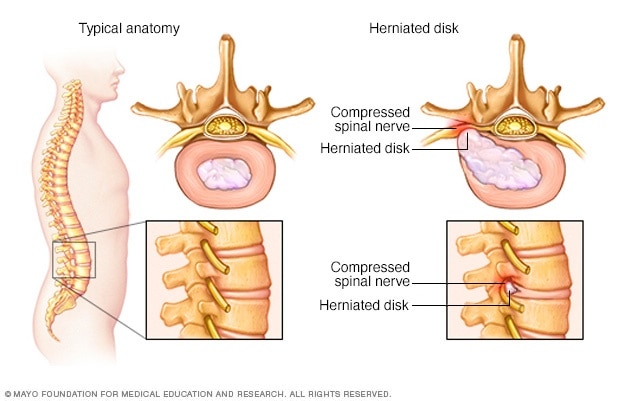
The spine is made up of bones called vertebrae. Between many of these bones are intervertebral discs: flexible cushions with a tough outer layer and a softer centre. They help absorb loads and allow the spine to move.
A herniated disc occurs when part of the disc’s inner material pushes through a weakened area of its outer layer. It is also called a slipped disc or prolapsed disc, although the disc does not literally slip out of place. If the protruding material irritates or compresses a nearby nerve, pain, tingling, numbness or weakness may occur.
Where can a herniated disc occur?
Lumbar disc herniation
This affects the lower back and may irritate a nerve travelling into the buttock or leg. When it produces pain along the sciatic nerve pathway, the symptoms are commonly described as sciatica.
Cervical disc herniation
This occurs in the neck. It may cause neck or shoulder pain, or symptoms that travel into the arm or hand if a nerve is affected.
Common symptoms
- Back or neck pain, sometimes beginning after lifting or an awkward movement.
- Pain spreading into a buttock, leg, shoulder or arm.
- Tingling, pins and needles or reduced sensation.
- Muscle weakness or difficulty with certain movements.
- Pain that becomes worse with particular positions, coughing or straining.
Some herniated discs cause no symptoms at all. Symptoms depend on the disc level and whether nearby nerves are irritated. Similar symptoms can also arise from other spine, joint or nerve conditions, so symptoms alone cannot confirm the diagnosis.
What causes a herniated disc?
Disc tissue changes gradually with age and may become less flexible. A herniation can develop during everyday activities or after a particular strain. Contributing factors may include age-related disc degeneration, repetitive lifting, lifting with poor technique, prolonged inactivity, excess body weight and smoking. Sometimes no single cause can be identified.
How is a herniated disc diagnosed?
An orthopaedic or spine assessment usually begins with a discussion of symptoms, their duration and any changes in strength or sensation. A physical examination may assess movement, muscle power, reflexes, sensation and nerve-related signs.
An MRI may be considered when symptoms are severe or persistent, when there are neurological findings, or when imaging would change treatment planning. X-rays can help assess bones and alignment but do not show disc tissue in the same detail as MRI. Imaging findings must be interpreted alongside symptoms because disc changes can also be present in people without pain.

How is a herniated disc treated?
1. Activity modification and symptom management
For many people, initial care is non-surgical. A clinician may advise temporarily modifying activities that aggravate symptoms while avoiding prolonged bed rest. Gentle walking and a gradual return to normal movement are often encouraged as tolerated.
2. Physiotherapy and guided exercise
A physiotherapist may recommend exercises to improve mobility, trunk control, strength and confidence with movement. The programme should be tailored to the affected spinal region and the person’s symptoms. Exercises that increase radiating pain, numbness or weakness should be reviewed rather than pushed through.
3. Medicines or selected injections
A doctor may discuss short-term medication to help manage pain or inflammation, taking account of medical history and possible side effects. In selected cases with persistent nerve-related pain, an image-guided injection may be considered. These treatments are not suitable for everyone and do not physically remove the herniated disc.
4. When is surgery considered?
Surgery may be discussed when significant nerve-related pain continues despite an appropriate trial of non-surgical treatment, or when there is progressive neurological weakness. Depending on the location and findings, a procedure such as discectomy or decompression may be considered. The decision depends on the symptoms, examination, imaging and individual risks. Surgery is not the routine first step for every herniated disc.
Warning signs that need urgent medical attention
Seek emergency assessment if back pain is accompanied by new numbness around the genitals or anus, difficulty starting or controlling urination, loss of bowel control, or severe or worsening weakness or numbness in both legs. These symptoms may indicate serious nerve compression and should not wait for a routine appointment.
Prompt medical review is also important for progressive weakness, fever with back pain, unexplained weight loss, significant trauma or pain that is rapidly worsening.
Can a herniated disc be prevented?
- Stay regularly active and build trunk and general strength gradually.
- Use safe lifting technique and keep loads close to the body.
- Break up long periods of sitting with movement.
- Work towards a weight that supports overall health.
- Avoid smoking and seek help to stop if needed.
- Increase exercise intensity gradually rather than suddenly.
Frequently Asked Questions
Does a herniated disc always require surgery?
No. Many people improve with activity modification, appropriate pain management and physiotherapy. Surgery is considered for selected cases, including persistent disabling symptoms or worsening neurological problems.
How long does recovery take?
Recovery varies with the disc level, nerve involvement, general health and treatment plan. Some people improve over several weeks, while others need a longer period of rehabilitation and follow-up.
Is walking good for a slipped disc?
Gentle walking is often useful if it does not worsen symptoms. Start with a comfortable duration and build gradually, following individual clinical advice.
Can an MRI confirm a herniated disc?
MRI can show discs and nearby nerves, but the scan must be interpreted with the person’s symptoms and examination. An imaging finding does not always explain pain.
When should I consult an orthopaedic specialist?
Arrange an assessment if pain persists, travels into an arm or leg, limits daily activities, or is associated with tingling, numbness or weakness. Emergency warning signs require immediate care.
Conclusion
A herniated disc is a common spine condition, but its impact varies widely. Care is guided by symptoms, examination and, when needed, imaging. Many people can begin with non-surgical treatment and structured rehabilitation, while surgery is reserved for specific situations.
If back or neck pain is persistent, radiates into a limb or is affecting your daily activities, an orthopaedic evaluation can help identify the cause and discuss appropriate care. Dr. Abhishek Agarwal is an orthopaedic and joint replacement surgeon in Siliguri, with clinical interests that include spine and musculoskeletal conditions. Explore the Spine Care and Diagnostics pages for further information.
Further reading: NHS: Slipped disc · NHS: Sciatica
