

The Importance of Strength Training for Bone Health
Strong bones help support movement, protect organs and allow people to remain independent as they age. Bone health is influenced by genetics, age, nutrition, hormones, medical conditions and physical activity. Among lifestyle measures, appropriately planned strength training can help maintain or improve bone strength while also building the muscles that support everyday movement.
Strength training is not limited to lifting heavy weights in a gym. It can begin with body-weight movements or resistance bands and progress gradually according to ability and health status.
How does strength training support bones?
During resistance exercise, muscles work against a load. The muscles pull on the bones to which they attach, creating mechanical forces that can stimulate bone to adapt. The response varies by age, exercise type, training history and health status, but regular loading can help maintain or improve bone strength. Stronger muscles also support posture, balance and the ability to perform daily tasks.
Strength training and weight-bearing exercise: what is the difference?
Strength or resistance exercise makes muscles work against resistance. Examples include weights, resistance bands, weight machines and body-weight movements such as sit-to-stand or squats. Weight-bearing exercise is performed while standing and supporting body weight through the legs and feet. Brisk walking, stair climbing and dancing are examples. Both types can contribute to bone health, and a suitable programme may combine them with balance training.
Examples of bone-supporting strength exercises
- Sit-to-stand: Repeatedly rising from a stable chair to strengthen the thighs and hips.
- Wall push-ups: A modified pushing exercise for the upper body.
- Resistance-band rows: Pulling a band towards the body to work the upper back and arms.
- Supported heel raises: Rising onto the toes while holding a stable support.
- Step-ups: Stepping onto a low, stable platform when balance and joint function allow.
- Squats or hip-hinge movements: Practised with appropriate range, support and technique.
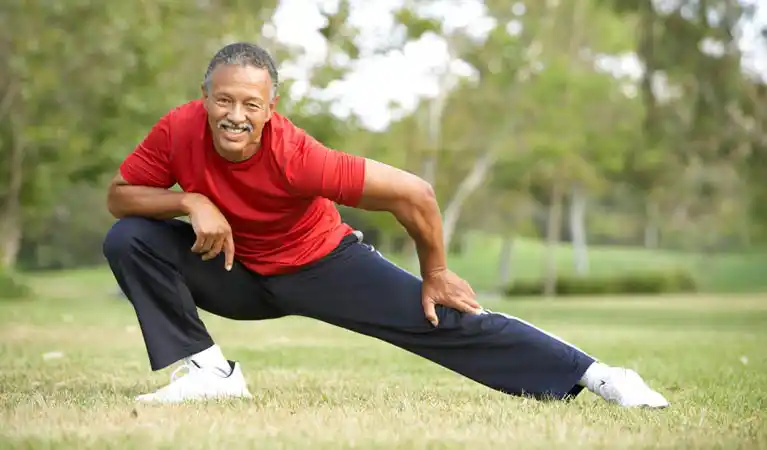
The right exercise selection depends on the person’s age, strength, balance, joint symptoms, fracture history and medical conditions. A movement that is suitable for one person may not be safe for another.
How often should you strength train?
Many bone-health exercise programmes recommend muscle-strengthening activity on two or three days each week, with recovery time between sessions. Begin with a manageable resistance and focus on controlled technique. As the exercise becomes easier, resistance or repetitions can be increased gradually. There is no single starting weight that is right for everyone. If you are new to exercise, a physiotherapist or qualified exercise professional can help select movements and demonstrate safe technique.
Safety considerations for people with osteoporosis
Many people with osteoporosis can exercise safely, but the programme should reflect fracture risk and medical history. People with previous spinal fractures, multiple fragility fractures, recent fractures, significant balance problems or pain should seek individual advice before starting or progressing resistance training.
Some movements that involve repeated or heavily loaded forward bending or twisting of the spine may need to be modified for people at increased risk of vertebral fracture. Avoid jerky movements and use controlled technique. If an exercise causes pain, dizziness, chest discomfort or unusual breathlessness, stop and seek appropriate advice.
Strength training is only one part of bone health
- A balanced diet with adequate calcium and protein.
- Vitamin D assessment and supplementation when clinically indicated.
- Not smoking and limiting alcohol.
- Fall-prevention measures, suitable footwear and balance training.
- Assessment of fracture risk when there are relevant risk factors.
- Medical treatment when osteoporosis or high fracture risk is diagnosed.
Exercise does not replace prescribed osteoporosis medication for people who need it. Do not stop or change treatment because you have started a strength programme.

When should you seek a bone-health assessment?
Discuss bone health with a clinician if you have had a fracture after a minor fall, have lost height, developed a rounded upper back, have a family history of hip fracture, or have medical conditions or medicines that may affect bone strength. A clinician may consider a fracture-risk assessment and bone-density testing, depending on your situation.
Frequently Asked Questions
Can strength training increase bone density?
Regular resistance exercise can help maintain or improve bone strength in some people. The response depends on the exercise, loading, age and individual health factors.
Is walking enough for strong bones?
Walking is a useful weight-bearing activity, but a bone-health plan often benefits from including resistance and balance exercises as well, if appropriate.
Can people with osteoporosis lift weights?
Many can, but the type of exercise, resistance and technique should be selected carefully. People with spinal fractures or multiple fractures should obtain individual guidance first.
How many days a week should I strength train?
Two or three days per week is commonly recommended for muscle-strengthening activity, with recovery between sessions. The plan should be adapted to your health and fitness.
Does exercise replace osteoporosis medicine?
No. Exercise supports bone and muscle health, but it is not a substitute for medication when treatment is recommended to reduce fracture risk.

Conclusion
Strength training is an important part of maintaining bone and muscle health. A gradual, well-designed programme can support strength, balance and daily function. The safest and most effective plan is one that reflects your current fitness, fracture risk and any existing joint or spine conditions.
If you have a history of fractures, persistent bone or joint pain, or concerns about osteoporosis, seek professional advice before starting a demanding programme. Dr. Abhishek Agarwal provides orthopaedic evaluation in Siliguri. Explore the Osteoporosis Clinic, Bone Density Testing and Physiotherapy pages.
Further reading: NIAMS: Exercise for Your Bone Health · Royal Osteoporosis Society: Strength exercise
